-
 ⭐ 5.0 Rating from 65+ Perth Patients
 - Reviews
 ⭐ 5.0 Rating from 65+ Perth Patients
Myopia Control for Children in Perth
Slow Vision Changes Early:
If your child’s eyesight is getting worse each year, there are now proven ways to help slow progression and protect their long-term vision.
“I've been trying to understand what I can do to help prevent my child's vision from getting worse over time. It's so promising that there have been technological advances in this area.”
Stephanie
Stephanie Yeo
E Eye Place Port Coogee and E Eye Place Newing & Co
BOptom (HC1), DOPT (Merit),
GradCertTher(ACO), CASA CO

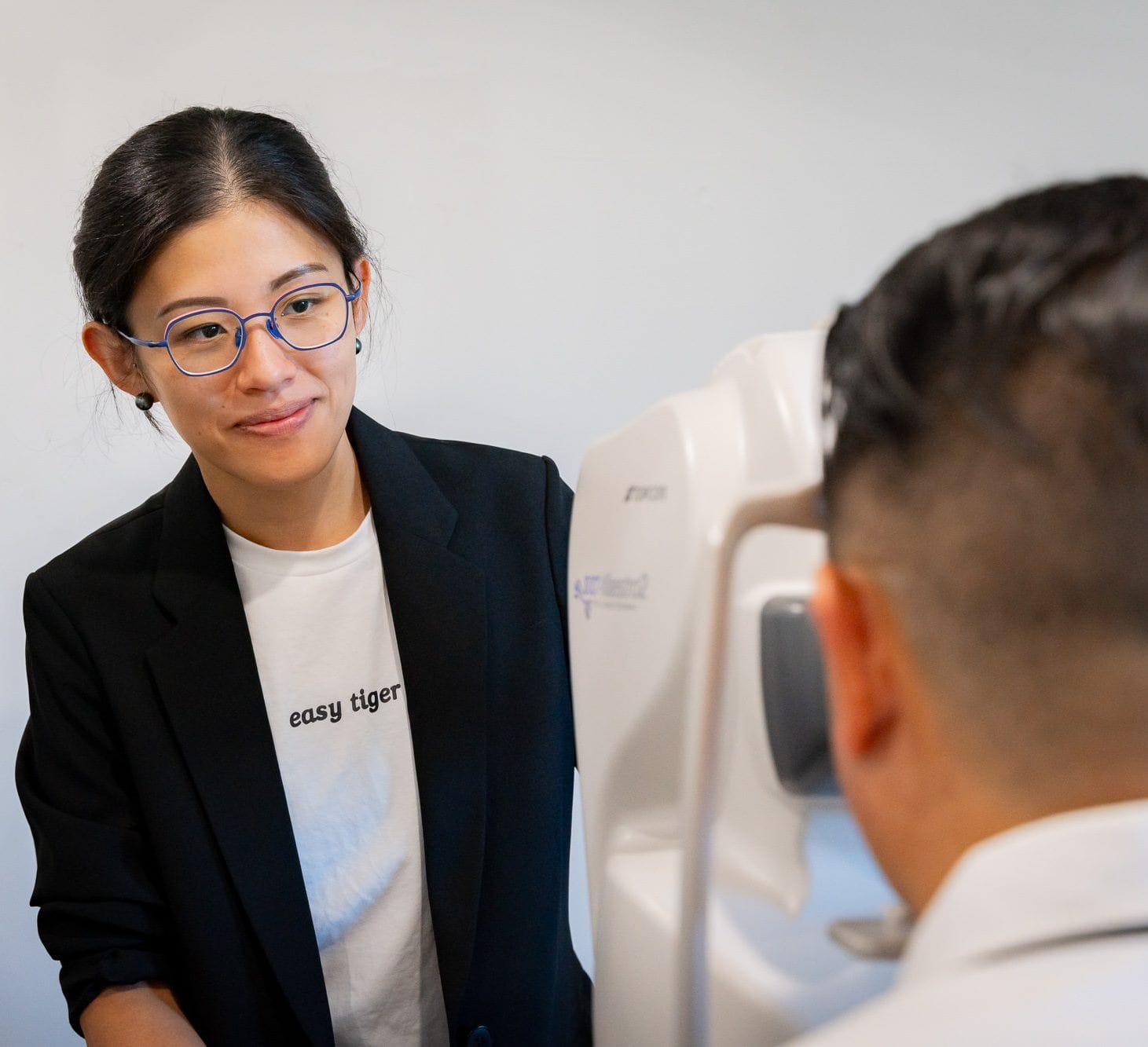
Stephanie
Experienced Care for Growing Eyes in Perth
Hi, I'm Stephanie.
Children's eyes are not simply smaller versions of adult eyes, they are still growing and developing, and that makes the early years a critical window for monitoring and protecting their vision.
Myopia, or short-sightedness, is becoming increasingly common in children, and what many parents don't realise is that left unmanaged, it can progress quickly during the school years. Early intervention isn't just about helping your child see the board more clearly today, it's about protecting the long-term health of their eyes for years to come.
This is an area I'm deeply passionate about, both as a clinician and as someone who follows the research closely. The evidence behind myopia management has grown significantly in recent years, and the options available to families today are more effective, more accessible, and better supported by clinical data than ever before.
At E Eye Place, I work closely with families to develop personalised myopia management plans based on your child's age, prescription, lifestyle, and how their myopia is progressing. There is no one-size-fits-all approach here, every child is different, and the plan we put in place should reflect that.
Our focus is always on practical, evidence-based options that are designed to slow the progression of myopia, not simply correct it.
Getting Started Is Simpler Than You Think
E Eye Place
Myopia Management
Step 1: Understand Your Child’s Vision
We assess your child’s prescription, eye health, and how their vision has been changing over time.

Step 2: Identify the Right Approach
Based on their age and needs, we recommend suitable myopia control options and explain how each works.
Step 3: Trial & Introduction
If contact lenses are suitable, your child can try them in a supported environment, at their own pace.
Step 4: Teach & Support
We guide both you and your child through everything, from handling lenses to building confidence.
Step 5: Ongoing Monitoring
Regular check-ups allow us to track progress and make adjustments if needed.
Could Myopia Control Help Your Child?
Answer a few quick questions to see if your child may benefit from myopia control and what options could be suitable.
Why Families Choose Us for Myopia Control
Early Intervention Focus
We prioritise slowing progression early, when it can make the biggest difference.
Individual Treatment Plans
Every child is different, and we tailor recommendations accordingly.
Support for Parents & Kids
We take the time to explain everything clearly and support your child through the process.
Ongoing Care & Monitoring
We track changes over time to ensure the best possible outcome.
FAQ
Frequently Asked Questions
About Myopia Control
What age can myopia control start?
Myopia control is typically most effective in children aged 6–16, but suitability depends on the individual. We assess this during your visit.
Will this stop my child’s eyesight getting worse completely?
The goal is to slow progression, not necessarily stop it entirely. Even slowing it down can make a meaningful difference long-term.
Are contact lenses safe for children?
Yes, when properly fitted and supervised, contact lenses are safe for children. Many adapt quickly and handle them confidently.
How quickly does myopia usually progress?
It varies, but many children experience changes each year. Faster progression is where myopia control can be especially helpful.
Do we have to commit straight away?
No, everything is explained clearly, and you can decide what feels right for your child. There’s no pressure to proceed.